
If you have ever been so absorbed in a task that you lost track of time, or noticed the smell of coffee or the feeling of sunlight on your face with unusual clarity, you have already experienced a form of mindfulness. It is not a mysterious mental state or a spiritual performance. It is simply the skill of paying attention, on purpose, to what is happening right now.
That sounds almost too simple to be useful. Yet that simplicity is exactly why mindfulness has become a serious topic of study in psychology, neuroscience, and medicine.
At its core, mindfulness means directing attention to present moment experience with an attitude of curiosity rather than judgment. Instead of replaying yesterday’s mistakes or rehearsing tomorrow’s problems, you work with what is actually happening in front of you. Your breath, your body, your thoughts, your surroundings.
You can think of the mind like a web browser with dozens of tabs open. Notifications pop up. Music plays somewhere. Everything competes for processing power. Mindfulness is the act of closing most of those tabs so the computer can run smoothly again.
What is the point?
The point is not to empty your mind or become permanently calm. Those goals are unrealistic and often frustrating. The point is to relate differently to your thoughts and feelings.
Normally we get pulled around by mental events. A stressful email appears and suddenly your whole afternoon is tense. A memory surfaces and your mood drops without you noticing why. Mindfulness creates a small but important gap between the stimulus and your reaction.
In that gap, you get choice.
Instead of “I am stressed,” you might notice “There is stress in my body right now.” Instead of “I have to fix everything,” you notice “My mind is generating worries.” That shift may sound subtle, but it reduces how tightly you identify with every thought. Thoughts become information rather than commands.
From a scientific perspective, this skill improves emotional regulation and reduces rumination, which is the repetitive negative thinking linked to anxiety and depression.
What are the benefits?
Research over the past two decades has found measurable effects across several domains.
Mindfulness based programs are associated with reduced stress, lower symptoms of anxiety and depression, improved attention, and better sleep. Brain imaging studies show changes in areas related to attention control, self awareness, and emotion regulation. In practical terms, people often report feeling less reactive and more grounded.
For example, a busy parent might notice irritation building before snapping at a child. An engineer debugging code might stay focused longer without drifting into distraction. A student might recover more quickly after a disappointing grade.
These are not dramatic transformations. They are small improvements in dozens of moments each day. Over time, those moments add up.
Do you have to set aside time to be mindful?
Yes and no.
Formal practice helps. Just like learning an instrument, you improve faster with dedicated practice time. Even ten minutes a day of structured attention training can build the skill.
But mindfulness is not meant to stay on a meditation cushion. The real goal is portability. You want to carry it into normal life.
Think of it like going to the gym. Lifting weights strengthens your muscles, but the benefit shows up when you carry groceries or climb stairs. Meditation is the workout. Daily life is where the strength gets used.
How do you practice it?
The simplest entry point is the breath.
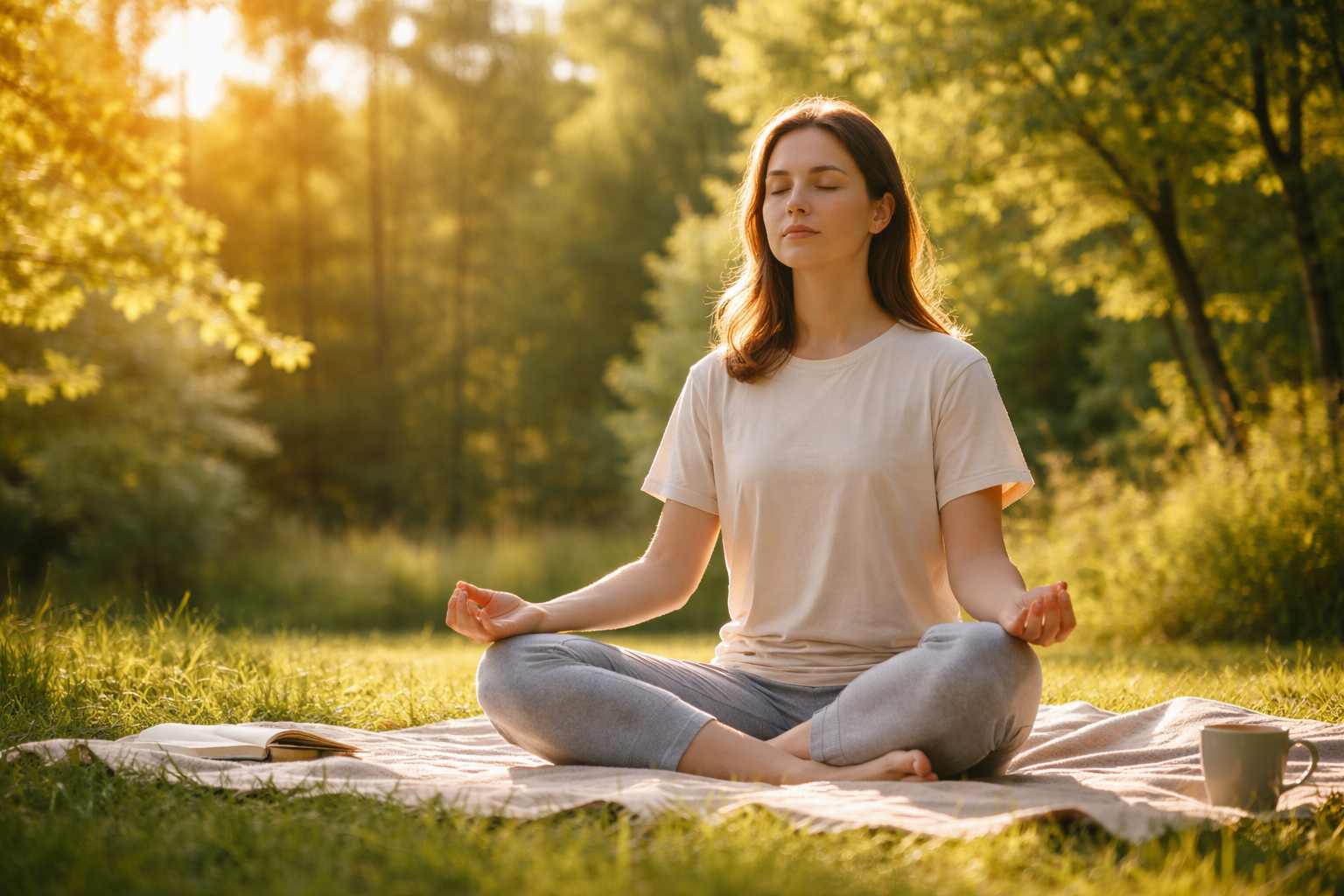
Sit comfortably. Set a timer for five or ten minutes. Close your eyes or soften your gaze. Notice the sensation of breathing. Air moving in, air moving out. You are not trying to control it. You are just observing.
Your mind will wander. That is guaranteed. When you notice you are thinking, gently label it as thinking and return to the breath. No scolding, no frustration. Each return is the practice.
Over time, you can expand awareness to include body sensations, sounds, or emotions. The attitude stays the same. Curious. Nonjudgmental. Present.
You can also practice informally throughout the day.
When washing dishes, notice the temperature of the water and the sound of the plates. When walking, feel your feet contact the ground. When drinking tea, actually taste it instead of scrolling your phone.
These are ordinary activities, but they become small anchors to the present.
A helpful metaphor is tuning a radio. Life has constant static. Mindfulness is gently adjusting the dial so the signal is clearer. You do not eliminate noise entirely, but you stop amplifying it.
Making it part of daily life
Many people assume mindfulness requires special conditions. Silence. Candles. Long sessions. In reality, it is more practical than that.
You can pause for three slow breaths before opening your inbox. You can notice your posture while waiting in line. You can take ten seconds to check in with your body during a meeting.
These micro practices train the same neural circuits as longer sessions. They also make mindfulness feel normal rather than like another item on your to do list.
Consistency matters more than duration. Five minutes daily beats an hour once a month.
A realistic mindset
It helps to keep expectations grounded. Mindfulness will not remove stress from your life. It will not make you permanently calm or productive. It will not solve every emotional problem.
What it can do is change how you meet those problems.
You still experience stress, but you recognize it sooner. You still have difficult thoughts, but you are less entangled in them. You still get distracted, but you come back more quickly.
It is less about becoming a different person and more about becoming slightly steadier in the person you already are.
In a world that constantly pulls attention outward, mindfulness is simply the practice of coming home to the present moment. Nothing mystical. Nothing dramatic. Just learning to notice what is already here.
And that small skill turns out to be surprisingly powerful.
Sources and additional reading
- American Psychological Association. “Mindfulness Meditation: A Research-Proven Way to Reduce Stress.” APA,
- Goyal, Madhav, et al. “Meditation Programs for Psychological Stress and Well-being: A Systematic Review and Meta-analysis.” JAMA Internal Medicine, vol. 174, no. 3, 2014, pp. 357–368.
- Tang, Yi-Yuan, Britta K. Hölzel, and Michael I. Posner. “The Neuroscience of Mindfulness Meditation.” Nature Reviews Neuroscience, vol. 16, 2015, pp. 213–225.
Leave a Reply